

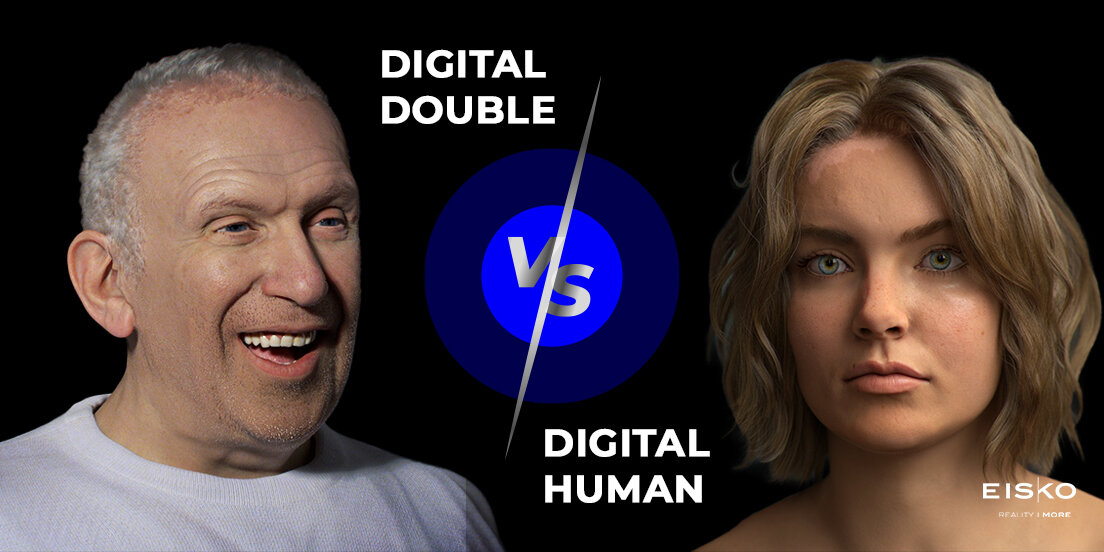
Digital doubles are virtual replicas of real-world individuals in three dimensions. Typically, high-precision physical attributes of the subject are captured using techniques such as 3D scanning and photogrammetry. In the entertainment industry, especially in movies and video games, digital doubles are commonly used to replicate well-known actors’ appearances and movements. Virtual representations must achieve fidelity in order to resemble their real-life counterparts as closely as possible. Creating a lifelike digital replica involves capturing facial expressions, body movements, and other physical details.
As opposed to a replica of an existing person, a digital human is a wholly original creation. Faces, body proportions, and realistic movements are often designed into digital humans. The difference between digital doubles and digital humans is that the former are primarily concerned with visual accuracy, while the latter are concerned with embodying unique personalities and original characteristics. A digital human can be imbued with lifelike expressions and behaviors through the integration of advanced technologies such as artificial intelligence (AI).
Key differences and impact on industries
Origin and creation process
Digital doubles and digital humans differ fundamentally in their origin and creation processes. Digital doubles are replicas of real individuals, created through techniques like 3D scanning, whereas digital humans are original creations designed from scratch, often using digital sculpting and animation software.
Representation and purpose
Digital doubles serve the purpose of replicating real-life individuals for use in entertainment, simulation, or other applications. Digital humans, on the other hand, are fictional characters or personas created to engage with users in virtual environments. They can be used as virtual assistants, influencers, or even brand ambassadors.
The impact on Entertainment and Gaming
Digital doubles have revolutionized the entertainment and gaming industries. How? By allowing for realistic character representations in movies, video games, and virtual reality experiences. Digital humans offer new opportunities for immersive storytelling and interactive experiences, as original characters with lifelike behavior and personalities.
Virtual Assistants and Customer Service
Digital humans are being used as virtual assistants and customer service representatives in various industries. Their human-like interactions and engaging personalities enhance user experiences and provide a more personalized and natural interface for communication.
Eisko: excelling equally in Digital Doubles and Digital Humans creations
Digital Doubles
Eisko, a distinguished recipient of awards, stands as a premier Digital Double company, demonstrating expertise in seamless collaboration with VFX, advertising, video game, and production studios. Our specialized focus revolves around the intricate 3D modeling and animation of celebrities, ensuring a meticulous process from head and body 3D scanning to rigging and animation. The result is a comprehensive solution that delivers ready-to-use 3D doubles tailored for diverse platforms and media, meeting all production requirements with excellence.

Digital Humans
Eisko specializes in crafting bespoke Digital Humans tailored to serve various roles, including virtual influencers, YouTubers, and Assistants/Chatbots. Our creations are designed to effectively address a spectrum of needs encompassing communication strategies, advertising endeavors, brand activation initiatives, community engagement efforts, and research and development challenges.

Harnessing the power of 3D technology
Digital doubles and digital humans represent distinct approaches to three-dimensional representation, each with its own unique characteristics and applications. While digital doubles replicate real-life individuals, digital humans are original creations designed to engage and interact with users in virtual environments. By harnessing the power of 3D technology, both concepts contribute to the advancement of industries such as entertainment, gaming, and customer service, offering new possibilities for immersive experiences and human-computer interaction. As technology continues to evolve, the boundaries between digital doubles and digital humans may blur, leading to even more innovative applications and experiences in the future. Stay tuned for further insights into the dynamic world of 3D technology and its impact on our digital lives with Eisko.
Contact us
Do you have a general question about our services? Do you need a quote or to talk with our specialists? Send us a short message and we’ll contact you back.
Information request
First name
Last name
Company
Your Message