
Digital doubles’ rights? In an era defined by digital immersion and technological advancement, the creation and use of digital humans have become a topic of growing interest and concern. These virtual beings, imbued with lifelike characteristics and behaviors, hold the promise of revolutionizing entertainment, communication, and beyond.
However, with this promise comes a pressing need for ethical reflection. Recent events, such as last year’s Hollywood strike, have highlighted the urgency of addressing the rights and protections of digital doubles. SAG members were fighting for better pay and working conditions as they face a labor landscape transformed by streaming and threatened by artificial intelligence. This strike underscored the industry’s concerns over the use and potential misuse of digital replicas of actors, raising important questions about consent, ownership, and ethical usage.
As pioneers in the field of digital human creation, Eisko recognizes the profound ethical considerations inherent in bringing these entities to life. Let’s explore some of the key ethical questions surrounding the creation and use of digital doubles, and how celebrities can keep the rights of their digital doubles.
Digital Doubles’ rights: privacy, consent, control…
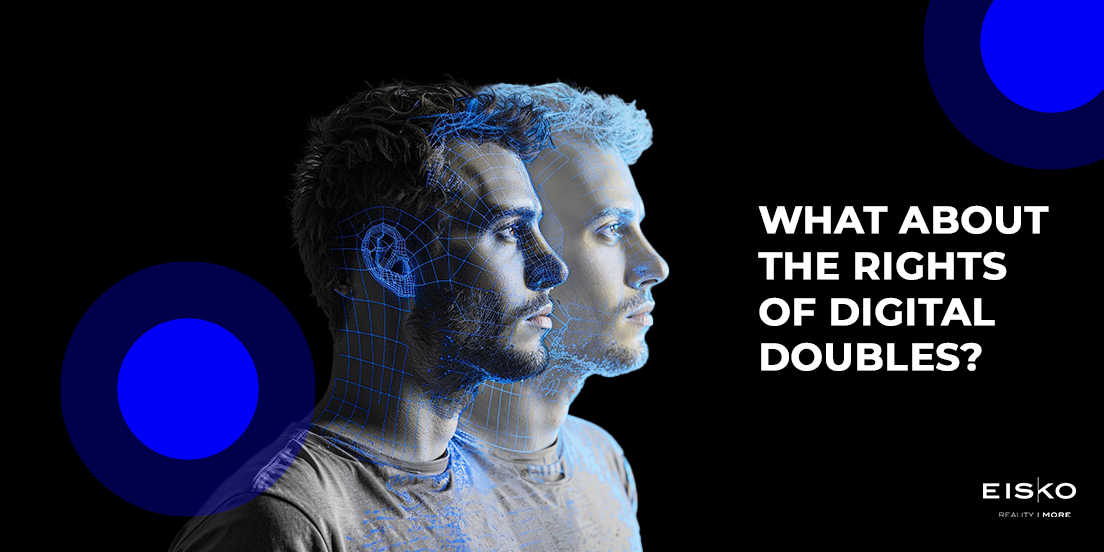
What about the rights of digital doubles?
#1 Privacy and Consent
One of the primary ethical concerns in the creation of digital humans is the issue of privacy and consent. When creating digital replicas of real individuals, it’s essential to obtain explicit consent and ensure that individuals understand how their likeness will be used. Failure to do so can infringe upon individuals’ privacy rights and lead to legal and ethical repercussions.
#2 Misuse and Manipulation
Digital humans have the potential to be used for deceptive purposes, such as spreading misinformation or manipulating public opinion. Ethical creators and users of digital humans must ensure that their creations are not used to deceive or manipulate others and must take steps to prevent misuse of their technology.
#3 Ownership and Control
Finally, the issue of ownership and control is a significant ethical consideration in the creation and use of digital humans. Creators must consider who owns the rights to digital humans and how they can be used. Additionally, users must have control over their digital representations and be able to determine how they are used and shared.

Eisko’s legal answers for digital doubles’ rights
Eisko addresses privacy and consent concerns by ensuring that celebrities have full control over their Digital Doubles. Celebrities and their agents can unlock the potential of their business without dealing with the complexities of digital productions. Our three-party contract allows for control over the Digital Representation and protection against unauthorized usage.
We provide protection against misuse and manipulation of Digital Doubles. By signing contracts with production companies for each project, celebrities retain control over how their Digital Doubles are used, mitigating the risk of deceptive practices. Our international legal framework also allows for control over integration into productions and protection against unauthorized exploitations like deepfakes.
In conclusion, the creation and use of digital doubles present exciting opportunities for innovation and creativity, but they also raise important ethical considerations that must be addressed. By approaching the creation and use of digital humans with mindfulness and ethical awareness, we can harness the potential of this technology while ensuring that it is used responsibly and ethically.
For more than 10 years, Eisko certifies the perfect 3D reproduction and guarantees the full control of celebrities on their own Digital Double. We ensure the technical, legal, and moral exploitation of this digital representation in time and over different media.
Contact us now to get your own digital double by Eisko.