digital humans

Human models and objects: mastering the magic of 3D creation

3D human models: what’s next?

In the ever-evolving world of 3D creation, the most challenging and intricate task remains the accurate digital representation of humans. At Eisko, we’ve dedicated ourselves to mastering this complex art, and as a result, creating any other 3D object becomes second nature to us.


The complexity of 3D human models

Human models are considered the pinnacle of 3D creation because of the immense detail, subtle nuances, and high standards of realism required. Replicating the unique features of the human face, the fluidity of body movements, and the subtleties of skin texture demand a level of precision and expertise that few can achieve.

At Eisko, we understand that capturing the essence of a human in 3D is not just about technical skill—it’s about artistry. Our team has honed its craft over years of dedicated work, blending cutting-edge technology with an artistic eye to create lifelike digital doubles that are indistinguishable from their real-world counterparts.


Human models created from scratch

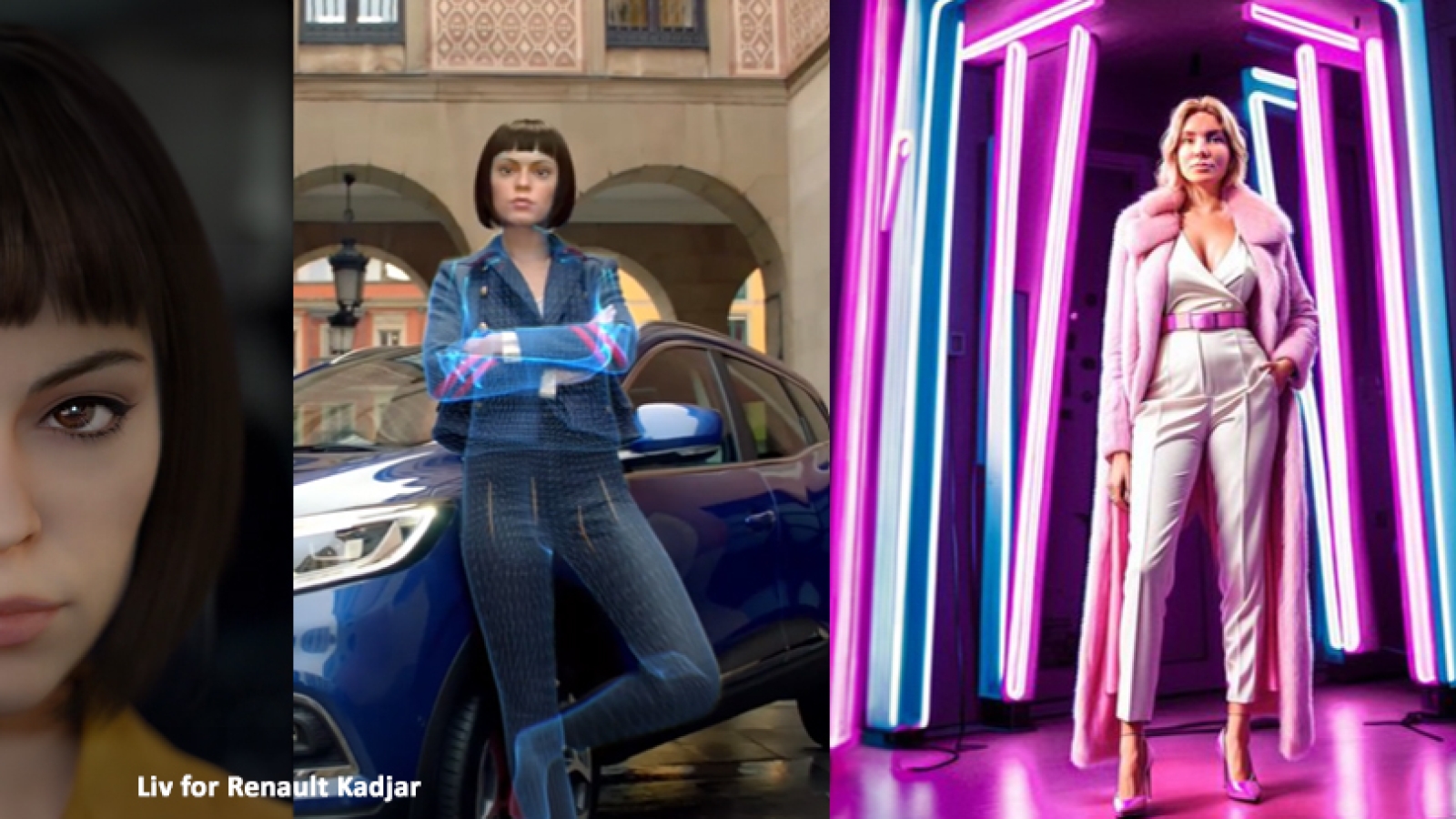
Digital Humans are entirely fictional entities created from scratch, not based on any real person. Unlike digital doubles, which mirror real individuals with meticulous accuracy, Digital Humans are conceived as virtual beings with unique identities, personalities, and traits. They are designed to act as virtual influencers and brand ambassadors, offering a fresh and innovative approach to engaging with audiences.

The Role of Digital Humans in Content Marketing

Digital Humans are revolutionizing content marketing strategies in several key ways:

  1. Innovative engagement: As virtual influencers, Digital Humans provide brands with a unique opportunity to engage audiences in novel and interactive ways. They can participate in social media campaigns, create content, and interact with followers just like traditional influencers, but with the added benefit of being fully controllable and customizable.
  2. Brand ambassadors with a twist: Digital Humans can embody specific brand values and messaging, serving as perfect brand ambassadors. Unlike real-life influencers, they can be designed to align perfectly with a brand’s vision and identity, ensuring consistent and strategic representation across all platforms.
  3. Enhanced content strategy: By incorporating Digital Humans into marketing campaigns, brands can produce highly engaging content that stands out in a crowded digital landscape. These virtual personalities can take on various roles, from hosting virtual events to participating in interactive experiences, all while maintaining a cohesive brand narrative.
  4. Cost efficiency and flexibility: Creating and managing Digital Humans can offer significant cost benefits. They eliminate the logistical challenges of working with human influencers, such as scheduling conflicts or travel issues. Additionally, Digital Humans can be adapted and modified with ease to fit different campaign needs and trends.

The ripple effect: simplifying object creation

When you specialize in something as complex as human models, creating other 3D objects becomes significantly easier. The same skills, attention to detail, and precision we apply to human models are naturally transferred to the creation of objects, environments, and more.

Our expertise in human models has provided us with a deep understanding of anatomy, material behavior, and the importance of realism, all of which are essential for any type of 3D creation. Whether it’s a product for a commercial, a vehicle for a game, or an intricate piece of machinery, we bring the same level of excellence to every project.

240417 scan1


Why Choose Eisko?

By choosing Eisko, you’re not just getting a service provider; you’re partnering with a team that understands the complexities of 3D creation from the inside out. We thrive on challenges and are passionate about pushing the boundaries of what’s possible in digital artistry.

Whether your project requires the lifelike accuracy of human models or the creation of other complex 3D assets, Eisko is equipped to deliver with precision, creativity, and reliability.

In the world of 3D creation, the ability to master the most challenging aspects—like human models—sets a company apart. At Eisko, we’ve proven that our expertise in this area not only distinguishes us but also simplifies and enhances our approach to all forms of 3D modeling.

When you work with Eisko, you can trust that no challenge is too great and that every project, no matter how complex, will be handled with the utmost care and expertise.

Contact us to know more!


A man with his digital double

Digital Doubles’ rights & ethical considerations

Digital doubles’ rights? In an era defined by digital immersion and technological advancement, the creation and use of digital humans have become a topic of growing interest and concern. These virtual beings, imbued with lifelike characteristics and behaviors, hold the promise of revolutionizing entertainment, communication, and beyond.

However, with this promise comes a pressing need for ethical reflection. Recent events, such as last year’s Hollywood strike, have highlighted the urgency of addressing the rights and protections of digital doubles. SAG members were fighting for better pay and working conditions as they face a labor landscape transformed by streaming and threatened by artificial intelligence. This strike underscored the industry’s concerns over the use and potential misuse of digital replicas of actors, raising important questions about consent, ownership, and ethical usage.

As pioneers in the field of digital human creation, Eisko recognizes the profound ethical considerations inherent in bringing these entities to life. Let’s explore some of the key ethical questions surrounding the creation and use of digital doubles, and how celebrities can keep the rights of their digital doubles.


Digital Doubles’ rights: privacy, consent, control…

What about the rights of digital doubles?

#1 Privacy and Consent
One of the primary ethical concerns in the creation of digital humans is the issue of privacy and consent. When creating digital replicas of real individuals, it’s essential to obtain explicit consent and ensure that individuals understand how their likeness will be used. Failure to do so can infringe upon individuals’ privacy rights and lead to legal and ethical repercussions.

#2 Misuse and Manipulation
Digital humans have the potential to be used for deceptive purposes, such as spreading misinformation or manipulating public opinion. Ethical creators and users of digital humans must ensure that their creations are not used to deceive or manipulate others and must take steps to prevent misuse of their technology.

#3 Ownership and Control
Finally, the issue of ownership and control is a significant ethical consideration in the creation and use of digital humans. Creators must consider who owns the rights to digital humans and how they can be used. Additionally, users must have control over their digital representations and be able to determine how they are used and shared.


digital doubles rights


Eisko’s legal answers for digital doubles’ rights

Eisko addresses privacy and consent concerns by ensuring that celebrities have full control over their Digital Doubles. Celebrities and their agents can unlock the potential of their business without dealing with the complexities of digital productions. Our three-party contract allows for control over the Digital Representation and protection against unauthorized usage.

We provide protection against misuse and manipulation of Digital Doubles. By signing contracts with production companies for each project, celebrities retain control over how their Digital Doubles are used, mitigating the risk of deceptive practices. Our international legal framework also allows for control over integration into productions and protection against unauthorized exploitations like deepfakes.


In conclusion, the creation and use of digital doubles present exciting opportunities for innovation and creativity, but they also raise important ethical considerations that must be addressed. By approaching the creation and use of digital humans with mindfulness and ethical awareness, we can harness the potential of this technology while ensuring that it is used responsibly and ethically.

For more than 10 years, Eisko certifies the perfect 3D reproduction and guarantees the full control of celebrities on their own Digital Double. We ensure the technical, legal, and moral exploitation of this digital representation in time and over different media.

Contact us now to get your own digital double by Eisko.


Digital double and digital human difference

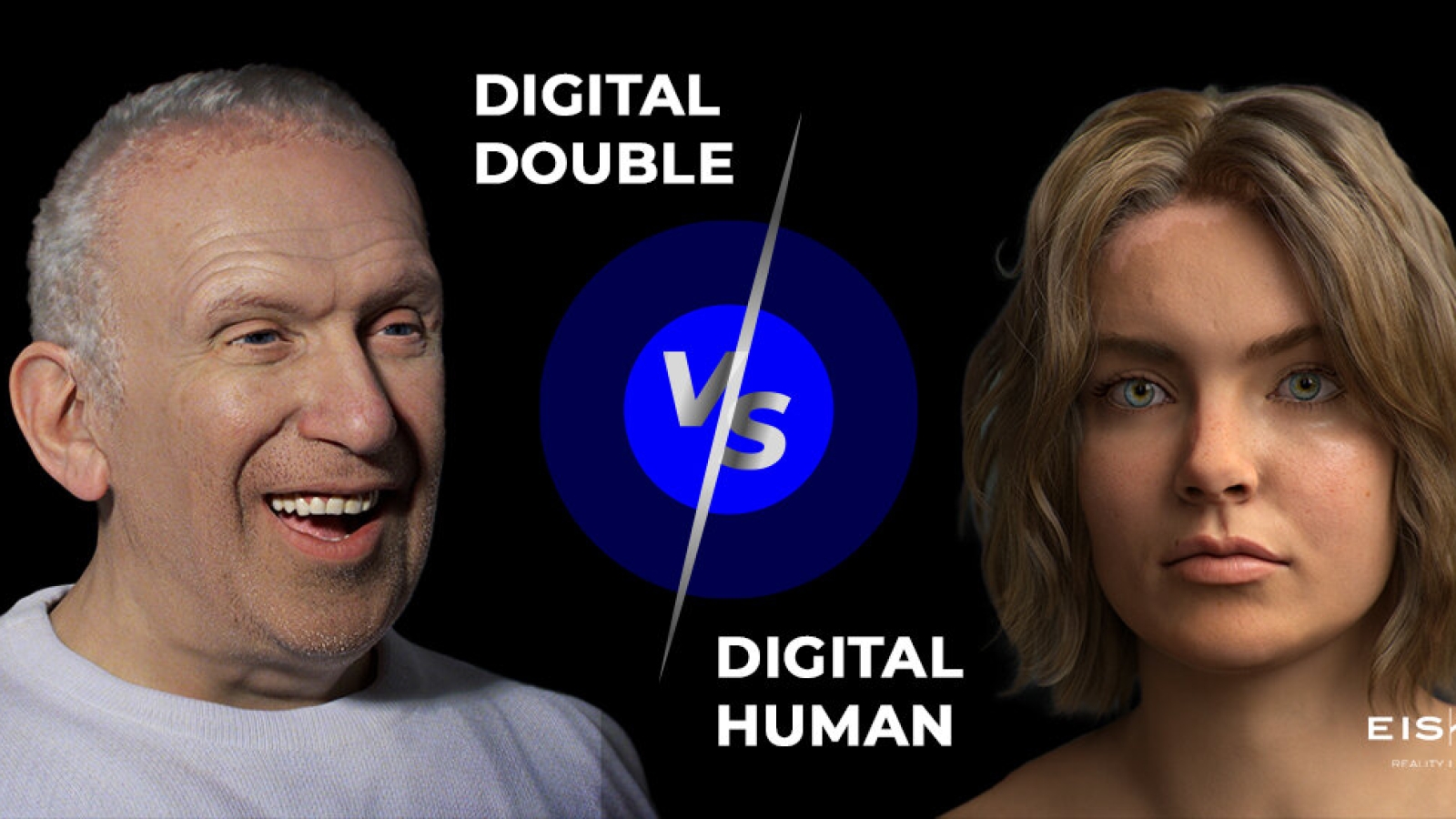
Digital Double vs. Digital Human: what’s the difference?

Digital doubles are virtual replicas of real-world individuals in three dimensions. Typically, high-precision physical attributes of the subject are captured using techniques such as 3D scanning and photogrammetry. In the entertainment industry, especially in movies and video games, digital doubles are commonly used to replicate well-known actors’ appearances and movements. Virtual representations must achieve fidelity in order to resemble their real-life counterparts as closely as possible. Creating a lifelike digital replica involves capturing facial expressions, body movements, and other physical details.

As opposed to a replica of an existing person, a digital human is a wholly original creation. Faces, body proportions, and realistic movements are often designed into digital humans. The difference between digital doubles and digital humans is that the former are primarily concerned with visual accuracy, while the latter are concerned with embodying unique personalities and original characteristics. A digital human can be imbued with lifelike expressions and behaviors through the integration of advanced technologies such as artificial intelligence (AI).

Key differences and impact on industries

Origin and creation process

Digital doubles and digital humans differ fundamentally in their origin and creation processes. Digital doubles are replicas of real individuals, created through techniques like 3D scanning, whereas digital humans are original creations designed from scratch, often using digital sculpting and animation software.

Representation and purpose

Digital doubles serve the purpose of replicating real-life individuals for use in entertainment, simulation, or other applications. Digital humans, on the other hand, are fictional characters or personas created to engage with users in virtual environments. They can be used as virtual assistants, influencers, or even brand ambassadors.

The impact on Entertainment and Gaming

Digital doubles have revolutionized the entertainment and gaming industries. How? By allowing for realistic character representations in movies, video games, and virtual reality experiences. Digital humans offer new opportunities for immersive storytelling and interactive experiences, as original characters with lifelike behavior and personalities.

Virtual Assistants and Customer Service

Digital humans are being used as virtual assistants and customer service representatives in various industries. Their human-like interactions and engaging personalities enhance user experiences and provide a more personalized and natural interface for communication.

Eisko: excelling equally in Digital Doubles and Digital Humans creations

Digital Doubles

Eisko, a distinguished recipient of awards, stands as a premier Digital Double company, demonstrating expertise in seamless collaboration with VFX, advertising, video game, and production studios. Our specialized focus revolves around the intricate 3D modeling and animation of celebrities, ensuring a meticulous process from head and body 3D scanning to rigging and animation. The result is a comprehensive solution that delivers ready-to-use 3D doubles tailored for diverse platforms and media, meeting all production requirements with excellence.

Jean-Paul Gaultier 3D model
Eisko for Jean-Paul Gaultier

Digital Humans

Eisko specializes in crafting bespoke Digital Humans tailored to serve various roles, including virtual influencers, YouTubers, and Assistants/Chatbots. Our creations are designed to effectively address a spectrum of needs encompassing communication strategies, advertising endeavors, brand activation initiatives, community engagement efforts, and research and development challenges.

a digital human in a fashion show
Eisko for Studio 71 • Prosieben

Harnessing the power of 3D technology

Digital doubles and digital humans represent distinct approaches to three-dimensional representation, each with its own unique characteristics and applications. While digital doubles replicate real-life individuals, digital humans are original creations designed to engage and interact with users in virtual environments. By harnessing the power of 3D technology, both concepts contribute to the advancement of industries such as entertainment, gaming, and customer service, offering new possibilities for immersive experiences and human-computer interaction. As technology continues to evolve, the boundaries between digital doubles and digital humans may blur, leading to even more innovative applications and experiences in the future. Stay tuned for further insights into the dynamic world of 3D technology and its impact on our digital lives with Eisko.

Contact us

Do you have a general question about our services? Do you need a quote or to talk with our specialists? Send us a short message and we’ll contact you back.

Information request


First name

Last name

Company

Email

Your Message

Indiana Jones 5 face replacement

Deepfake vs. Traditional CGI: What’s Best for Your Studio?

In the ever-evolving world of visual effects (VFX), the emergence of deepfake technology has introduced a new paradigm in the creation of hyper-realistic content. Deepfakes, a portmanteau of “deep learning” and “fake,” utilize sophisticated machine learning and artificial intelligence techniques to manipulate or generate visual and audio content with stunning accuracy. This technology, primarily based on neural network architectures like autoencoders and generative adversarial networks (GANs), has opened new doors for creativity in the VFX industry.


CGI: The Traditional Powerhouse

Computer-Generated Imagery (CGI) has been the cornerstone of visual effects in filmmaking and television. Its ability to create photorealistic environments, characters, and elements that would be impossible or impractical to film in the real world has revolutionized the industry.

Pros of CGI:

  • Flexibility: CGI offers unparalleled control over every aspect of the image.
  • High-Fidelity 3D Models: Eisko specializes in creating high-fidelity 3D models with PBR (Physically Based Rendering) textures, shading, and AAA-grade rigs.
  • Photorealism and High Resolution: Ideal for detailed close-ups and complex scenes.
  • Reusability: Once a 3D asset is created, it can be used repeatedly across multiple projects.
  • Advanced Hair Simulation: Sophisticated techniques for realistic hair and fur animation.

Cons of CGI:

  • Expertise-Dependent: Requires a team of specialists in modeling, animation, and rendering.
  • Time-Consuming: The process from modeling to rendering can be lengthy.
  • Accuracy Challenges: The final output can be less convincing if the digital double isn’t perfectly crafted.


Deepfake: The Innovative Challenger

Deepfake uses deep learning algorithms to seamlessly replace one person’s facial features with another in video content.

Pros of Deepfake:

  • Speed: Once the model is trained, creating new shots can be significantly faster than traditional CGI.
  • Photorealism: Provides a high degree of realism, especially in facial expressions and movements.
  • Simplified Process: Bypasses steps like rigging and keyframe animation, focusing on facial features.

Cons of Deepfake:

  • Implementation Time: Setting up an AI Face Replacement pipeline can be time-consuming and requires specific expertise.
  • Data-Heavy: A large database of images is needed to train the model effectively.
  • Resolution Limitations: Some tools may offer lower resolution outputs compared to high-end CGI.
  • Actor Dependency: Requires a base shot with an actor of similar morphology for best results.

Eisko's 3D scanning system

Eisko’s Hybrid Approach: Best of Both Worlds

Eisko stands at the forefront of this technological evolution with the “Eisko Holistic Capture Protocol.” This unique approach integrates the precision of high-fidelity 3D scanning with the efficiency and speed of AI Face Replacement. When an actor is scanned using our system, we provide not only a detailed 3D model complete with PBR textures, shading, and AAA-grade rigging but also a dataset ready for AI Face Replacement. This hybrid solution empowers studios to utilize the most appropriate technique for each scene, ensuring both quality and efficiency.


In Conclusion

Deciding between AI Face Replacement and traditional CGI hinges on the specific requirements of your project. While CGI offers unmatched detail and control, AI Face Replacement excels in rapid production of realistic human faces. Eisko’s holistic approach allows studios to harness the strengths of both technologies, paving the way for unparalleled visual storytelling.


Image: Courtesy of Walt Disney Co.

Contact us

Do you have a general question about our services? Do you need a quote or to talk with our specialists? Send us a short message and we'll contact you back.

Information request

    First name

    Last name

    Company

    Email

    Your Message

    A 3D model with a MetaHuman rig and an iPhone

    MetaHuman Animator: Revolutionizing Indie Game Development

    In the competitive landscape of video game development, indie studios often grapple with the challenge of producing high-quality character animations on limited budgets. MetaHuman Animator, developed by Epic Games, is revolutionizing this space by offering a tool that enables the creation of AAA-quality facial animations, previously the domain of well-funded studios.

    MetaHuman Animator simplifies the complex process of character rigging. Rigging, a crucial step in character animation, involves creating a skeleton that dictates how a character moves. Traditionally a complex and time-consuming process, MetaHuman Animator’s automated rigging system allows even small studios to achieve high-quality results. This advancement is significant, as detailed rigging is essential for creating realistic character movements and expressions.


    The Role of Motion Capture in Game Animation

    At the heart of MetaHuman Animator’s capabilities is its use of motion capture (mocap) technology. Mocap involves recording the movement of objects or people to create animated digital characters. This technology is particularly effective in capturing detailed human expressions and movements, translating them into digital characters with lifelike accuracy.

    Facial motion capture, a specialized form of mocap, focuses on capturing the subtle nuances of facial expressions. This technology is vital for creating characters that can connect emotionally with players, allowing for the portrayal of complex emotions and reactions.


    Integrating Advanced Mocap Solutions

    The integration of MetaHuman Animator with body motion capture solutions like Rokoko and Xsens further enhances its capabilities. This combination allows for the creation of characters that not only have realistic facial expressions but also exhibit natural, fluid body movements. The synergy between MetaHuman Animator and these advanced mocap solutions represents a significant advancement in character animation, particularly for indie studios.

    A motion capture setup
    Credits: Lisha Dunlap

    Addressing the Limitations: The MetaHuman Creation Process

    While MetaHuman Animator excels in creating high-quality animations, it faces challenges in the realm of digital double creation, especially when compared to detailed portrayals like Norman Reedus in “Death Stranding.” Unlike this game, where the digital double was crafted with meticulous detail to accurately represent Reedus, MetaHuman Animator’s reliance on a predefined ‘face space’ system can limit the ability to replicate real-life individuals precisely.

    This system, although efficient for generating a wide range of faces, may not capture the unique, specific nuances of an individual’s facial features, which are crucial for creating an exact digital double. For projects that demand a high level of authenticity and detail, akin to the digital portrayal of Norman Reedus, studios might find the MetaHuman Creator’s capabilities a bit restrictive. This highlights the need for additional tools or methods to achieve a true-to-life digital double, where every aspect of the person’s appearance is replicated with utmost accuracy.


    Case Study: Freaky Hoody and the MetaHuman Animator


    A prime example of the capabilities of MetaHuman Animator is embodied in the character ‘FreakyHoody.’ Created using Eisko’s proprietary scanning systems, which employ a hybrid approach of photometry and photogrammetry, FreakyHoody represents a full-body digital double that exemplifies photorealism with its highly detailed geometry and physically-based rendering (PBR) textures.

    What sets FreakyHoody apart is the process of its creation. Unlike characters generated through the MetaHuman Creator, FreakyHoody bypasses this step, thanks to Eisko’s ability to create a MetaHuman-type rig directly from the scan data. This approach ensures that the appearance of the original subject is accurately preserved, without the limitations imposed by the ‘face space’ system of MetaHuman Creator.

    This case study demonstrates how Eisko’s technology synergizes with MetaHuman Animator, offering a solution that combines the best of both worlds: the advanced animation capabilities of MetaHuman Animator and the precision of Eisko’s digital double creation process. The result is a character that not only looks incredibly lifelike but also moves with the realistic fluidity and expressiveness that MetaHuman Animator is known for. This breakthrough showcases the potential for studios to create highly authentic and engaging characters, pushing the boundaries of what’s possible in digital animation.


    Conclusion: The Future of Game Development with MetaHuman Animator

    As the gaming industry continues to evolve, the demand for more realistic and emotionally engaging characters grows. MetaHuman Animator, with its advanced capabilities and integration with mocap solutions, is at the forefront of meeting this demand. For studios looking to push the boundaries of what’s possible in game animation, MetaHuman Animator offers an unprecedented opportunity.

    For those aiming to achieve the pinnacle of realism in character animation, partnering with Eisko offers a unique advantage. Our proprietary 3D scanning technology, combined with a MetaHuman rig compliant with MetaHuman Animator, sets a new standard in the industry. We invite you to explore the possibilities with Eisko and elevate your game development to new heights.


    Go further: